The Situation in the Middle East
We know many of you are watching events in the Middle East closely, and we want to speak to you directly, honestly, and without alarm. We have rec...
March 31, 2026
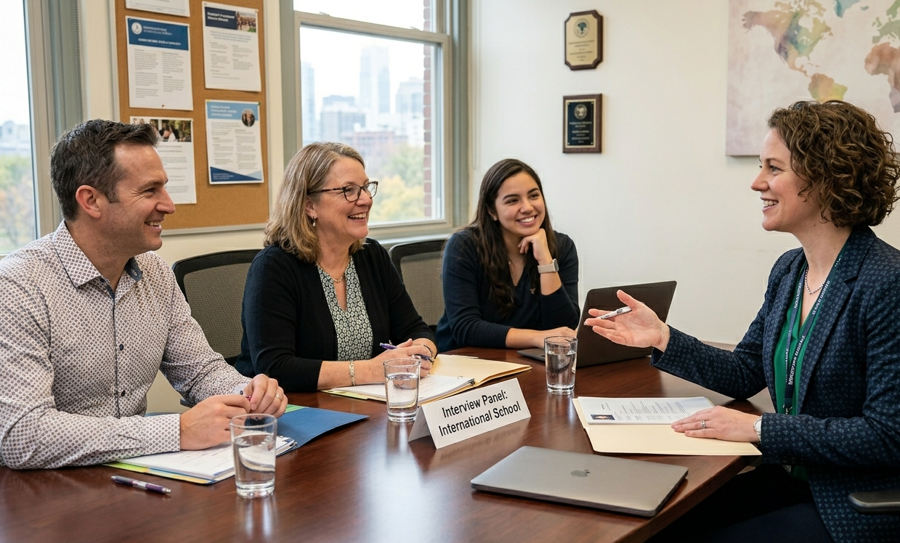
For many teachers, securing an interview is a significant milestone. It reflects that your experience, qualifications, and application have already made a positive impression. Yet the interview is often where decisions are truly made. It is the moment where schools move from what they see on paper to who you are in practice.
Preparation, therefore, matters.
The starting point is simple but often overlooked. Know the school. Take time to understand its ethos, curriculum, results, and community. Look beyond the homepage. What does the school value? How does it present itself? What kind of students does it serve? When a candidate clearly understands the school, it shows immediately. It also allows you to answer questions with relevance and purpose, rather than in general terms.
Clarity of communication is equally important. Schools are not only listening for what you have done, but how you explain it. Be ready to talk about your teaching with specific examples. What impact have you had on student learning? How have you adapted your teaching for different learners? What challenges have you faced, and how did you respond? It is also important to consider what you can contribute beyond the classroom, whether through co-curricular activities, pastoral care, or wider involvement in school life. Strong candidates answer with clarity, reflection, and honesty, and show that they can add value to the broader school community.
It is also important to think about alignment. Why this school? Why this role? Schools are looking for teachers who genuinely want to be part of their community, not simply any international position. Being able to articulate why you are interested in that particular school adds weight to your application.
Preparation should also include your referees and your professional narrative. Be consistent in how you present your experience, your strengths, and your aspirations. Schools are looking for coherence. They want to understand not only where you have been, but where you are heading.
If your interview is online, which is increasingly common, there are additional considerations. Test your technology in advance. Ensure your internet connection is stable, your audio is clear, and your camera is positioned well. Choose a quiet, professional setting with minimal distractions. First impressions still matter, even through a screen. Looking engaged, maintaining eye contact with the camera, and listening carefully all contribute to how you are perceived.
If your interview is in person, the dynamics are slightly different. Presence and interaction become more immediate. How you greet people, your body language, and your awareness of the environment all contribute to the overall impression. Arriving prepared, composed, and attentive sets the tone from the very beginning. You never get a second chance to make a first impression.
In both formats, authenticity is key. Schools are not looking for perfect answers. They are looking for thoughtful, reflective professionals who understand their practice and are open to growth. It is perfectly acceptable to pause, to think, and to respond carefully. Over-rehearsed answers can feel less genuine than honest, well-considered responses.
You should also prepare questions of your own. Interviews are a two-way process. Asking about professional development, school culture, or team collaboration shows that you are thinking seriously about where you will be working, not just whether you will be offered the role.
Behind every interview panel is a simple, often unspoken question: would I be happy for this person to teach my child? It is a powerful lens, and one that many school leaders use, consciously or not. Your task is not to impress with rehearsed answers, but to demonstrate the professionalism, care, and integrity that would give confidence in that moment.
This is also where the recruitment process itself is evolving. Platforms such as Teacher Recruit are designed to create stronger alignment earlier, helping schools and teachers connect based on shared priorities before the interview stage. When that initial match is right, interviews tend to feel more natural, more focused, and ultimately more successful for both sides.
Preparation does not mean scripting every response. It means understanding your own story, knowing the school, and being ready to communicate with clarity and sincerity.
In the end, interviews are not about saying the right thing. They are about showing, clearly and confidently, who you are as a teacher and how you and the school are a good fit for each other.
For years, teacher recruitment has been monotonous and expensive. Teacher Recruit is an App that simplifies this. It globally matches teachers and schools instantly.
Create your account on Teacher Recruit and receive our top tips for your job hunt in your inbox.

© 2026 Teacher Recruit
Privacy Policy
Registered Offices:
Singapore:
Teacher Recruit PTE Ltd: 160 Robinson Road, #14-04 Business Federation Centre, Singapore (068914)
United Kingdom:
Teacher Recruit Ltd: 71-75 Shelton Street, Covent Garden, London WC2H 9JQ (15179149)